DIY Bed Liners
Herculiner Truck Bed Liner Kit: DIY Roll-On Liner Steps, Colors and Tips
Quick answer: A roll-on kit like the Herculiner truck bed liner kit is a DIY coating you brush and roll onto a clean, sanded bed. Prep decides success: clean, sand, mask, coat in thin layers and cure fully before loading.
A Herculiner truck bed liner kit is the best-known DIY bed coating, and it is popular because it costs far less than a professional spray-in liner. It also demands patience. The coating is only as good as the prep, and shortcuts show up as peeling, bubbling or a patchy finish. This guide walks through the DIY roll-on process, explains how to choose a truck bed liner roller, what colors are available, how spray options compare and when a pro job is smarter.
We carry the Herculiner brush-on kit and other DIY coatings and have answered many questions from first-time users. The tips below come from those questions.
What a roll-on bed liner is
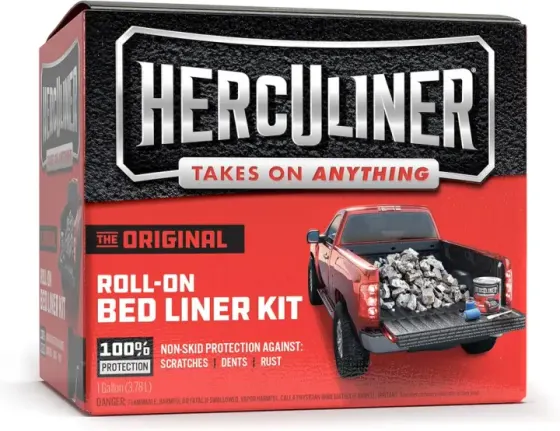
A roll-on liner is a thick, textured coating you apply with a brush and a roller. It bonds to the bed, seals the metal and adds a rough surface that grips cargo. The Herculiner brush-on bed liner kit at $97.99 is a typical product: a gallon of coating, a roller, a brush and tray.
Compared with a drop-in plastic liner, a roll-on coating has no gaps for water and dirt, and it follows every contour. Compared with a professional spray-in, it is thicker in places and less uniform, but it costs much less.
Other DIY kits to compare
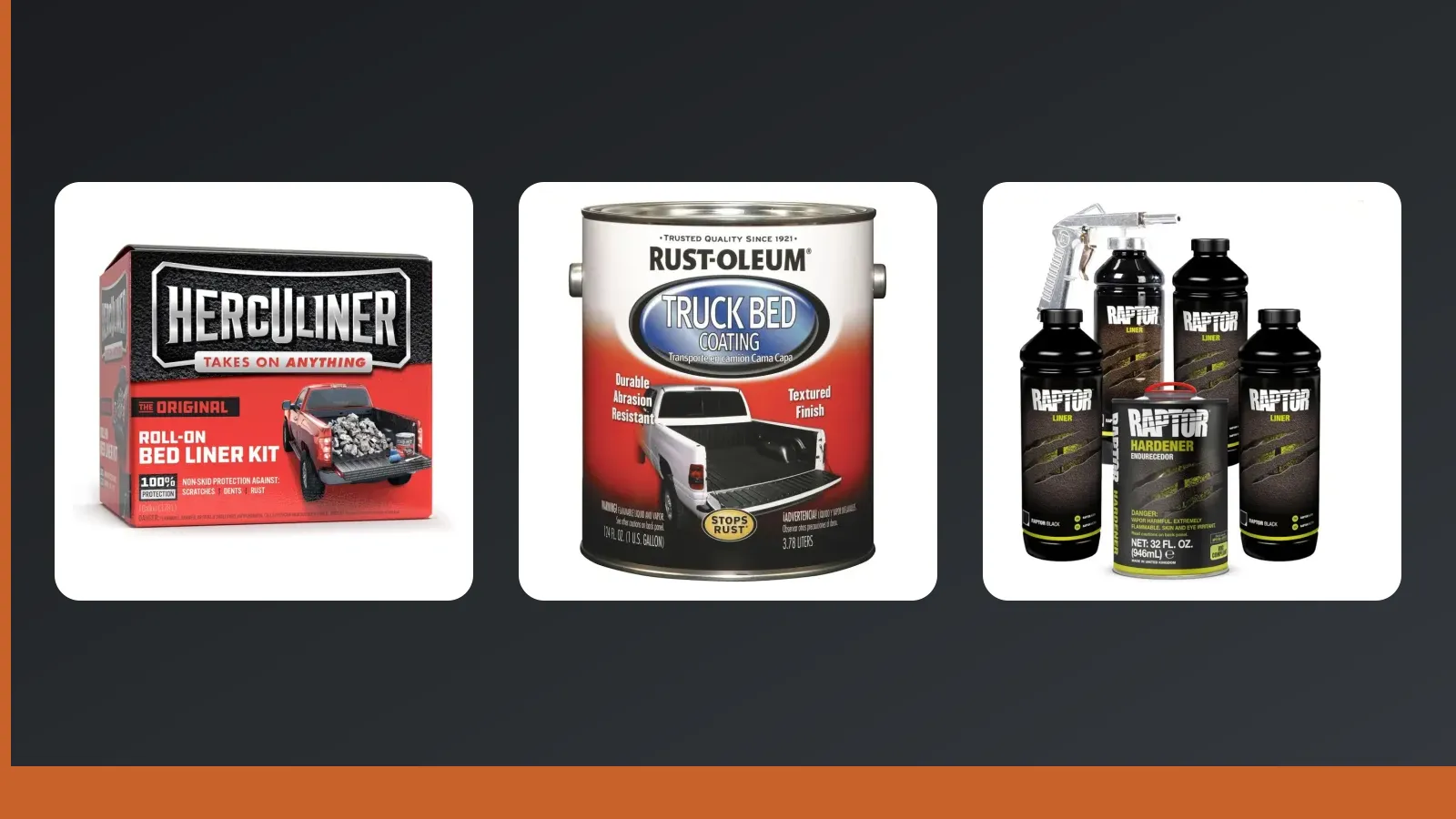
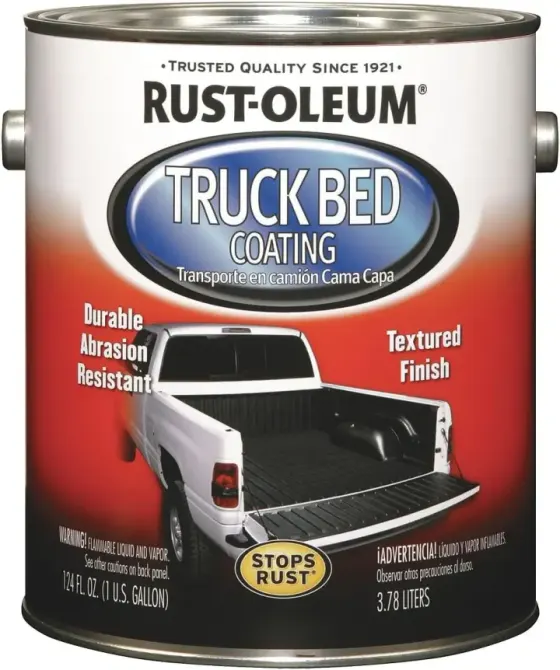
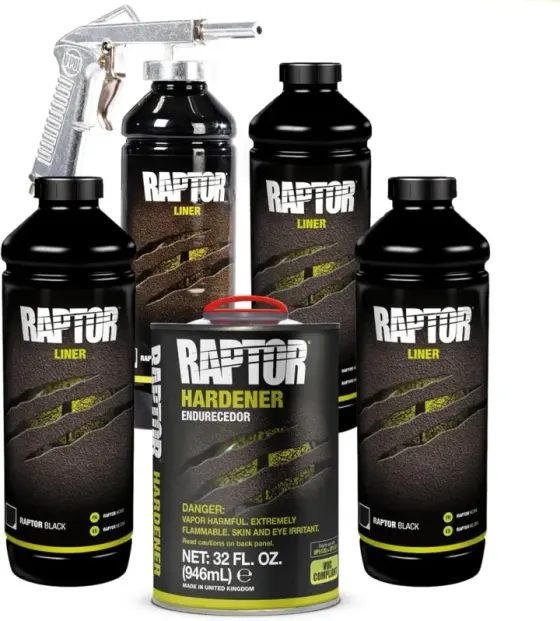
Two other kits are common. The Rust-Oleum truck bed coating kit at $87.99 is a roll-on coating at a low price. The U-POL Raptor DIY urethane bed liner kit at $136.99 is a spray-on style kit that uses a gun, and it gives a finish closer to a professional liner. Compare the finish, the cure time and the cost.
See our truck bed liner cost guide for price ranges.
Prep: the step that decides the result
Clean the bed with degreaser and rinse it dry. Remove any old liner, rust and loose paint. Sand the whole surface with 80 grit sandpaper or a scuff pad until it is dull, and wipe off the dust. Fix dents and treat rust spots with a rust converter. Mask everything you do not want coated, including the tailgate edges, the rails and the tie-downs if you want them clean.
Prep takes longer than the coating, and it matters more. A coating over a glossy, dirty or rusty surface will peel.
Truck bed liner roller and brush tips
A truck bed liner roller is a thick-nap roller used to lay the coating and create texture. Use the roller from the kit or a coarse foam roller, and use the brush for corners and edges. Work in small sections, roll in one direction and keep a wet edge so the seams blend.
Do not overload the roller, and do not overwork the coating. Lay it on, texture it lightly and move on. Wear gloves and a respirator, and work in a ventilated space.
Coating layers and cure time
Most kits call for two coats. Apply the first coat, wait the stated time (often a few hours), then apply the second coat. Let the liner cure fully before loading, which can take a day or more, and longer in cold or damp weather. Do not drive in rain or wash the bed during the cure.
Check the temperature range on the label. Coating in cold weather leads to poor bonding and a long cure.
Truck bed liner colors: red and white options
Black is the standard, but color options exist. Searches for a red truck bed liner on a white truck show that some owners want a contrast. Many kits come in black only, while some brands offer colors or can be tinted. A light color shows dirt and scratches more, and a dark color hides them.
Check that the color you want is available as a roll-on or a spray-on, and read the maker notes on tinting.
Truck bed liner spray white and spray-on options
A spray-on liner in white or another light color is possible with some systems, including professional services and some DIY kits. Spray-on gives a more uniform finish than a roller, but it needs equipment and skill. A truck bed liner spray white option is often special order, so ask before you plan around it.
If you want a color other than black, ask a professional shop. They can mix and spray to match.
Common DIY liner mistakes
The common mistakes are skipping sanding, coating over rust, applying too thick, working in cold weather and loading too early. Other mistakes include forgetting to mask the tailgate and rails, and not ventilating the garage.
If you make a mistake, wet-sand and recoat before the liner cures fully. If it peels later, strip it back to bare metal and start again.
Tools and supplies checklist
Gather a degreaser, a scrub brush, 80 grit sandpaper or scuff pads, a tack cloth, rust converter if needed, masking tape and paper, a respirator, gloves, a brush, a roller and a tray, and rags. Add a drop cloth for the garage floor and a fan for ventilation. If your kit includes a roller and brush, check their size and buy spares if needed.
Lay out the supplies before you start, since you will not have time to hunt for things once the coating is open and drying.
Weather, temperature and humidity
Choose a dry day with a temperature within the range on the label. Cold slows curing and weakens the bond, heat makes the coating tack too quickly and humidity can cause blushing or poor adhesion. Work in a garage if you can, with ventilation, and keep dust down.
Check the forecast for the cure period. A bed left in the rain too soon can ruin the finish.
Care and repair of a roll-on liner
A roll-on liner can be washed with mild soap and a soft brush. Avoid pressure washing close up, which can lift edges. Touch up chips with a small amount of coating after sanding the edges. Do not use harsh solvents.
If a section peels, cut back the loose edge, sand the area and recoat. Fix small problems early, because peeling spreads when water gets under it.
Where to send DIY liner questions
If you want help choosing a kit or planning the job, email info@truckbedshop.com with your truck and bed condition. We reply within 24 hours. Orders over $99 ship free in the US, most orders dispatch within 2 business days and unused items in original packaging can be returned within 30 days.
How much coating you need
Estimate the bed area before you buy. A short bed needs less coating than a long bed, and the sides and tailgate add area. One gallon often covers a short or standard bed with two coats, but check the coverage on the label, and buy a second kit for a long bed or a bed with deep texture. It is better to have a little left over than to run out halfway.
Keep leftover coating sealed and in a cool place for touch-ups later.
Texture, grip and finish
Roll-on coatings make a rough texture that grips cargo and hides scratches. You can control the texture by how you roll: more passes smooth it, fewer leave it rougher. Keep the texture even, and avoid ridges at the edges. A rougher finish holds cargo better but is harder to clean.
Test a small area first, such as the tailgate inside, to find the texture you like.
Safety and cleanup
Coatings give off fumes. Work with ventilation and a respirator rated for organic vapors, and keep away from flames and sparks. Wear gloves and eye protection. Dispose of leftover coating, brushes and rags according to local rules, and never pour coating down a drain. The EPA and OSHA publish guidance on coatings and respirators.
DIY or professional
A DIY kit costs a fraction of a professional liner and gives a decent result with care. A professional spray-in is more uniform, bonds better and often comes with a warranty. If the truck is new, valuable or heavily used, consider a pro job such as LINE-X at $636.99 or Rhino Linings at $587.99. If it is an older truck and you like the project, DIY is fine.
If you want help choosing, email info@truckbedshop.com with your truck and your budget. Orders over $99 ship free in the US.

Rhino
Rhino Linings Premium Polyurea Spray-On Bed Liner
$587.99
Ships within 2 business daysView detailsFrequently asked questions
Is a Herculiner kit hard to apply?
Not hard, but prep takes time. Clean, sand, mask and apply thin coats.
How long does a roll-on liner take to cure?
Often a day or more before loading, longer in cold or damp weather. Follow the label.
Can I get a colored roll-on liner?
Black is standard. Some brands offer colors or tinting, so check the product.
Do I need a special roller?
Use the kit roller or a coarse foam roller, and a brush for corners.
Is DIY as good as a professional liner?
It is cheaper and decent with good prep, but a professional spray-in is more uniform and often warranted.
Further reading
Ready to upgrade your truck bed?
Browse covers, liners, toolboxes and accessories with free shipping over $99 in the US.
Related buying guides
Cost to Linex a Truck Bed: Spray-In, Drop-In and DIY Bed Liner Prices ComparedHow to Install a Canopy Over a Truck Bed: Truck Cap Steps, Tools and TipsSide Mount Tool Box for Truck Bed: Types, Sizes, Mounting Kits and What to BuyOverland Truck Topper: Caps for Camping, Gear and Expedition Builds ComparedToyota Tacoma Truck Cap: Caps, Covers, Mats and Accessories for the Tacoma BedBest Tri Fold Tonneau Cover: Soft and Hard Tri-Fold Truck Bed Covers ComparedBest Truck Bed Mats 2026: Custom-Fit and DIY