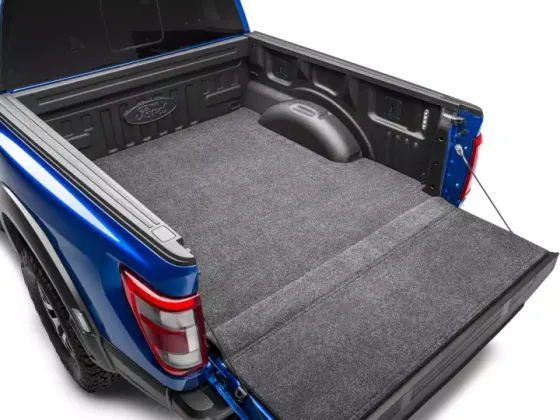
DIY Truck Bed Slide
DIY Truck Bed Slide: Plans, Parts and Safety Tips for a Homemade Cargo Slide
Quick answer: A DIY truck bed slide is a plywood platform on heavy-duty slide rails bolted to a base. It needs sealed slides, a lock, strong fasteners and a conservative load rating. Buy a ready-made slide if you carry heavy loads often.
A DIY truck bed slide looks simple: a platform, a pair of slides and a few bolts. The details decide whether it works for years or fails the first time you load a cooler and a generator. This guide covers DIY truck bed slide plans, the parts that matter, how to size the load and when a ready-made slide is a better buy.
We sell cargo slides and answer build questions regularly. What follows is the practical version, written for owners who want a slide that works and does not hurt anyone.
DIY truck bed slide plans: the basic design
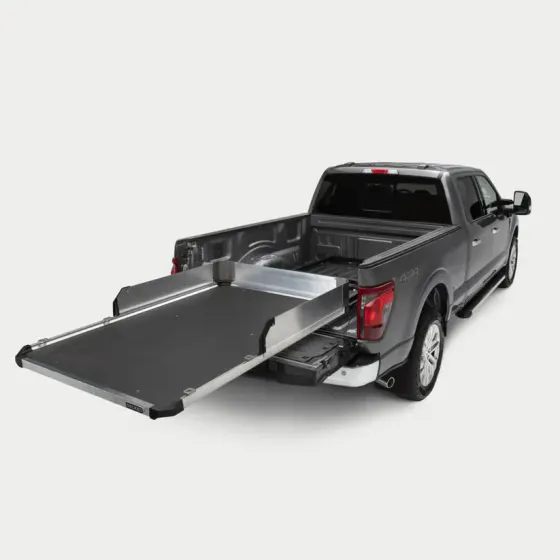
Most homemade slides share a design. A base frame of plywood or aluminum sits on the bed floor and is strapped or bolted down. A platform on top rides on a pair of heavy-duty slides that extend toward the tailgate. A stop and a lock keep the platform from sliding when the truck moves, and a handle makes it easy to pull.
You can build the platform from marine-grade plywood or aluminum sheet. Plywood is cheap and easy to cut but heavy, and it needs sealing against moisture. Aluminum is light but costs more.
Homemade DIY truck bed slide: parts and tools
Plan for two or three heavy-duty slides rated well above your load, stainless or coated fasteners, a plywood or aluminum platform, a lock or latch, edge trim, a handle and a waterproof sealer. Tools include a drill, a saw, a square, a tape measure and clamps.
Choose slides with sealed bearings or rollers. Light-duty drawer slides do not survive weather and shock. A full-extension slide reaches the end of the platform, which makes loading easier.
Truck bed slide out rails: how to choose them
The rails are the heart of the slide. Rate them for the heaviest load you expect, and add a safety factor of at least 50 percent. A rail rated at 500 pounds is fine for a load of about 300. Check the mounting hole pattern so you can bolt through the platform and base, and make sure the rails fully extend without hitting the tailgate.
Look for a lock-open feature, because a platform that rolls back on a slope can pinch fingers. Our truck bed slide out rails guide compares rail types.
DIY truck bed slide out rails: mounting without damage
Avoid drilling the bed floor. Build a base frame that sits on the floor and attach the rails to the frame. Hold the frame in place with tie-down straps or the factory tie-down points. If you must drill, check what is under the floor, use rubber washers and seal the holes.
Bolt through the platform and rails with locknuts or thread-locker so vibration does not loosen them. Check the bolts after the first week.
Bed slide DIY: sizing the platform
Measure the usable floor length from the bulkhead to the tailgate and the width between the wheel wells. Make the platform slightly narrower than the wheel well span so it does not rub. Leave room at the tailgate so the platform can extend past it without hitting the gate.
A shorter platform is easier to build and lighter. Most owners build a platform about two-thirds of the bed length, which extends past the tailgate by a third when pulled out.
Load limits and safety
A slide failing under load is a real injury risk. Keep the load rating conservative, never stand on the platform and never let the platform hang loaded past the tailgate on a slope. Keep the load low and use a lock when you drive. The U.S. OSHA publishes lifting and safety guidance that applies to loaded platforms.
Remember payload. The slide, the platform and the load all count against your truck payload.
Weatherproofing and maintenance
Seal all plywood edges and surfaces with marine varnish or epoxy, and use stainless fasteners. Grease slides with a waterproof grease and rinse them after dusty trips. Inspect the lock and the bolts every month, and replace worn parts.
A bed mat such as the BedRug XLT at $224.99 under the base reduces noise and protects the bed floor.
Ready-made slides compared with DIY
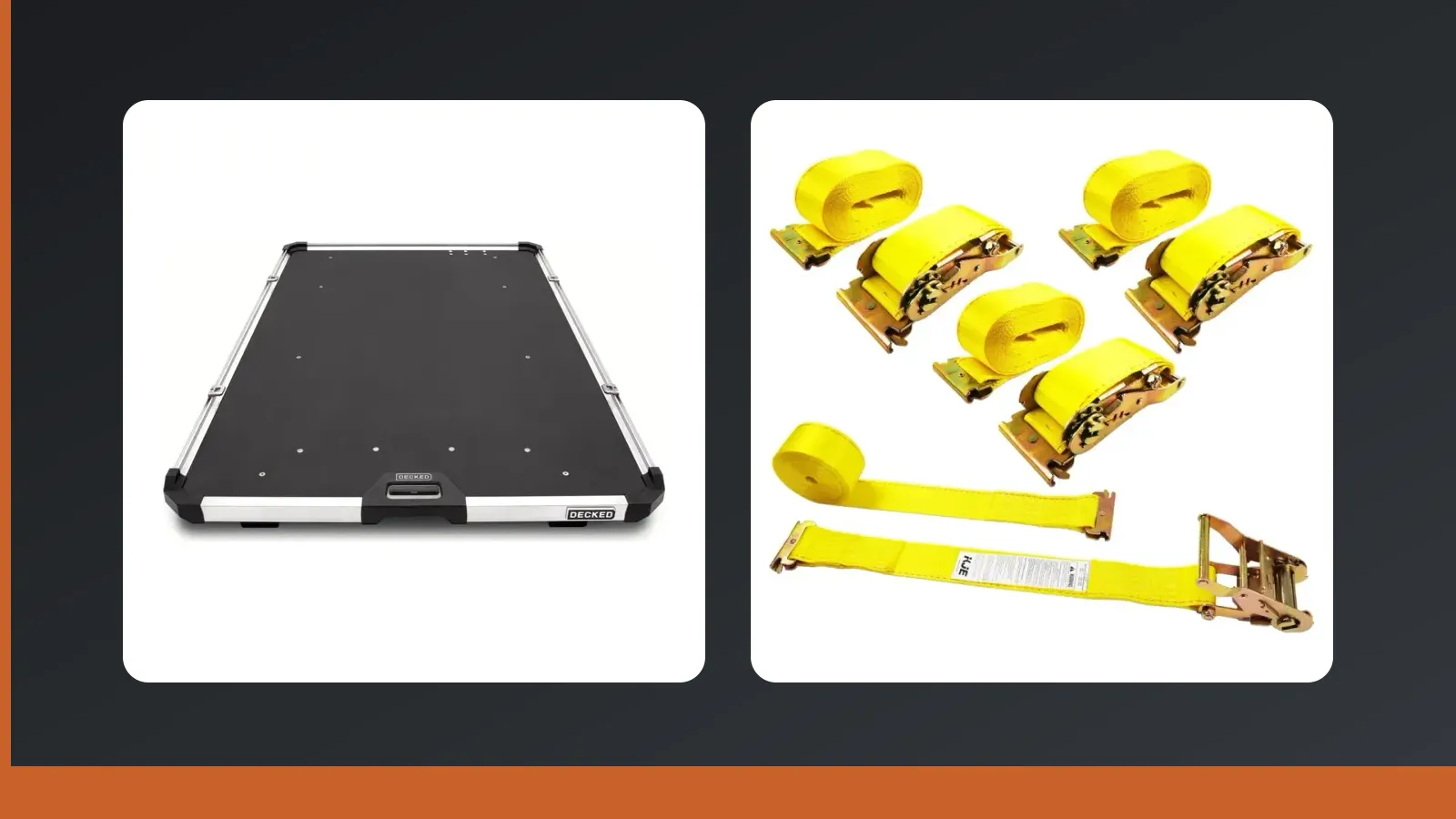
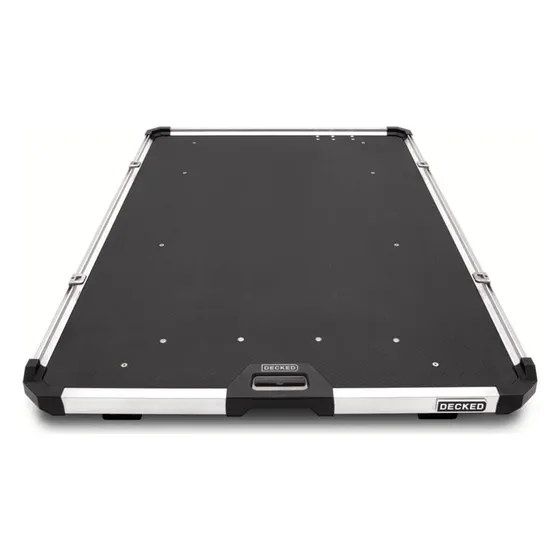
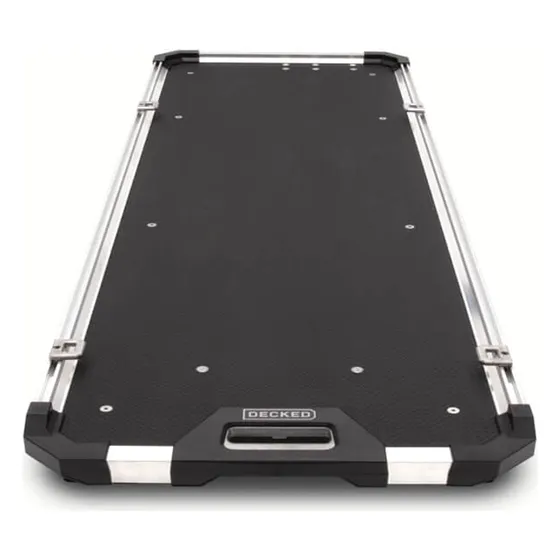
A ready-made slide is tested, rated and often fits the bed with no drilling. The DECKED CargoGlide at $1,469.99 and CargoGlide 600 at $881.99 are examples, and the BedSlide 2000 at $2,111.99 is a heavy-duty option. They cost more than a DIY build but save time, last longer and come with a warranty.
If you carry heavy loads weekly, the ready-made route is usually the better value. If you carry light loads occasionally, a DIY slide can work.
DIY slide cost compared with a bought slide
A DIY slide has two cost drivers: the rails and the platform. Heavy-duty sealed rails cost a meaningful amount, and marine plywood, hardware and sealer add more. When you count your time, a DIY build rarely saves as much as people expect, and you carry the risk of a failure.
A ready-made slide costs more up front but bundles tested rails, a platform, a lock and a warranty. If you only want a platform for occasional light loads, a DIY build is reasonable. If you want to carry a generator or a full cooler every week, buy a slide that is rated for it.
Common DIY slide mistakes
The usual mistakes are using light-duty slides, skipping a lock, drilling through the bed floor without sealing and building a platform that is too long to extend safely. A platform that hangs past the tailgate when extended can tip the whole slide if you load it unevenly.
Other errors include forgetting that plywood swells when wet, using zinc screws that rust within a season and not leaving clearance for the tailgate. Plan for each of these before you cut any wood.
Testing a homemade slide before you trust it
Test in stages. Load the slide with half the weight you plan to carry and extend it on level ground, then add weight gradually. Pull and push it fifty times and check each fastener. Drive a short loop with the slide locked and check again.
If anything flexes, binds or rattles, fix it before you carry a real load. A slide is a moving platform that holds heavy cargo, and testing is cheaper than repairing a bed or an injury.
Where to send questions
If you want a second opinion on a plan, email info@truckbedshop.com with your truck, bed length and the loads you plan to carry. We reply within 24 hours and can suggest a ready-made option if your plan looks too ambitious. Orders over $99 ship free in the US.
DIY slide design variations worth knowing
A few variations solve common problems. A two-rail slide is the simplest and works well for coolers and toolboxes. A three-rail slide adds a center support, which keeps a wide platform from sagging under load. A slide with a stop block at the rear keeps the platform from leaving the rails when extended. Some builders add a folding leg that touches the ground at full extension, which supports heavy loads and keeps stress off the rails.
Pick the variation that matches your loads. If your heaviest item is a cooler, two rails are enough. If you carry a generator or a heavy toolbox, use three rails and a leg.
Upgrades once the DIY slide works
After the basic slide works, small upgrades make it better: a rubber mat on the platform keeps loads from sliding, a pair of tie-down rails lets you strap loads without touching the bed, and a pull handle with a loop makes it easy to open with gloves on. Keep the changes simple, and recheck the rail bolts after each change.
When to stop building and buy
Stop and buy if you plan to carry more than a couple of hundred pounds, if you tow, if you need the slide under a cover or if you cannot find sealed heavy-duty rails. Those are the situations where a DIY build is most likely to disappoint.
Email info@truckbedshop.com with your truck, bed length and the loads you carry and we suggest a fit. See the drawers guide for the other storage route.
Frequently asked questions
How do I build a DIY truck bed slide?
Build a base frame, mount heavy-duty slide rails on it, add a platform, a stop and a lock, and seal the wood. Rate the load conservatively.
What slides should I use for a truck bed slide?
Heavy-duty sealed ball-bearing or roller slides rated well above your load, with full extension and a lock-open feature.
Do I have to drill my truck bed?
No. A base frame strapped or bolted to the tie-down points avoids drilling the floor.
How much can a homemade slide carry?
It depends on the slides and build. Plan for a safe load well under the rated figure and keep within your truck payload.
Is a ready-made slide worth it?
For heavy or frequent loads, yes. It is tested, rated and fits the bed.
Further reading
Ready to upgrade your truck bed?
Browse covers, liners, toolboxes and accessories with free shipping over $99 in the US.
Related buying guides
Truck Bed Slide Out Rails: Types, Load Ratings and How to ChoosePickup Bed Drawer Slides: How Truck Bed Drawer Systems Work and What to BuyBed Extender Pickup Truck Guide: Hitch Extenders, Kayak and ATV OptionsTruck Bed Steps: Tailgate Steps, Side Steps and Ladders ComparedCamping in a Pickup Truck Bed: Setup, Tents, Mattresses and IdeasBackroadz Truck Tent Full Size Bed: Sizing, Fit and What to CheckHard vs Soft Tonneau Cover: Which to Choose